Adventure Trek
When and Where
When:
August 9-15, 2026
, 7:00 am — 1:00 pm
Nights:
6
Location: Mount Katahdin / Baxter State Park, Maine
🙋🏻♂️ RSVP
Passed
When: 06/22/2026
✍️ Waiver
Passed
When: 08/03/2026
🚲 Gear shakedown — bring everything, load it on the bike
Passed
When: 08/03/2026
🚴 Fully loaded group ride
Passed
When: 08/05/2026
📦 Gear drop-off & vehicle loading
Passed
When: 08/08/2026
💰 Mandatory Fee
Passed
When: 08/08/2026
🩺 Medical Form
Passed
When: 08/09/2026
🚗 Go
Passed
When: 08/09/2026
Troop 23 Service Contribution
Menacing Monkeys Patrol
3 scoutsRyan & Chipmunks Patrol
2 scoutsAdditional Participants
4 totalOpportunities Realized
Nights
Miles
Service
Totals across everyone who took part.
Adventure Trek is Troop 23's flagship high adventure — a week-long expedition that pushes scouts beyond weekend camping into serious backcountry territory. From Sunday, August 9 through Saturday, August 15, 2026, we're heading to Maine for a multi-sport push around Mount Katahdin — the highest peak in the state and the northern terminus of the Appalachian Trail.
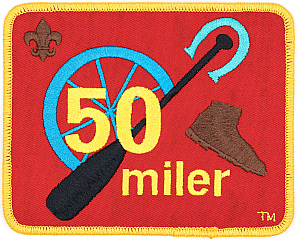
The trek combines two disciplines into one expedition: a ~100-mile bike loop around Baxter State Park's eastern boundary along the International Appalachian Trail corridor, plus a summit attempt on Mount Katahdin on foot — about 10 miles round trip with ~4,150 feet of elevation gain. Combined, the trek is designed to qualify for the 50 Miler Award: five consecutive days, 50+ miles under your own power, and 10 hours of service along the way. Our planned ~115 miles and ~9,900 ft total vertical clear the bar with room to spare.
How It Went
We rode it. Five days, 85 miles under our own power around Baxter State Park and Katahdin Woods and Waters.
- 🌅 On the trail at 5:05 a.m., off it at 5:38 p.m. — and the descent took 53 minutes longer than the climb
- ⛰️ Iron rungs driven into the rock above the treeline, and Baxter Peak, 5,267 ft, at 10:47
- 📈 ~9,500 ft of climbing — and the mountain put up ~4,300 of it in one day, against ~4,900 from three days of riding
- 🌠 Ten shooting stars in half an hour at Trout Brook — the Perseids peaked on a new moon, no moonlight at all, and that will not happen again until 2045
- 🚵 A gravel pitch at 14% — steeper than Alpe d'Huez at its steepest, the climb that decides the Tour de France. Ours was gravel, loaded, on the fourth day. Nobody rode it.
- 🔧 One saddle that snapped ten miles from camp. He rode the rest of the way standing up.
- 🎉 A service project that turned out to be a national monument's tenth birthday — ribbon cutting, speeches, and the leftovers of the reception
The Friday on this page never happened.
Read the full trip report →

When and Where
Dates: Sunday, August 9 — Saturday, August 15, 2026 (7 days, 6 nights)
Region: Baxter State Park & Katahdin Woods and Waters National Monument, north-central Maine
Trip start / end: Togue Pond Gate, Baxter State Park (the main southern entrance), about 10 hours by car from Brooklyn — split across two days in each direction.
Format: 1 travel day → 4 days cycling on quiet North Woods roads → 1 summit day on foot (Katahdin), interleaved so the five active days run back to back → 1 travel day. The bike loop runs clockwise around Baxter's eastern boundary, with three group campgrounds along the way.
Partly supported: the vehicles come into the park with us and stay at Foster Field for Monday and Tuesday, which is what makes the summit day work — the heavy kit, the coolers, and the troop kitchen are all right there. From Wednesday morning the cars are out of the picture, so what a scout needs rides on the bike: sleep kit, tent, water, layers, and food. The longest stretch without a vehicle runs from Wednesday morning to Thursday afternoon — that is four meals leaving Foster Field on your rack, not one day's worth. A vehicle meets us again at Lunksoos on Thursday. That gap is what the rear rack and panniers are for.
⚠️ Weather
Northern Maine in August: daytime highs typically 70–80°F, nights dropping into the 40s. Black flies are usually past peak by August but mosquitoes are not. Mount Katahdin makes its own weather — afternoon thunderstorms are common and the park can close the summit above treeline with little warning.
Where we actually are, and what it means
Worth being precise about this, because it drives the whole packing list. Every campsite and every mile of riding on this trek sits in a narrow band between 375 and 1,090 feet. There is exactly one day that goes anywhere near alpine terrain — Tuesday.
Each point below links to its own National Weather Service point forecast, generated for those exact coordinates. Millinocket's forecast is a useful directional read, but a camp at 375 feet on a river and a summit at 5,267 feet are not the same weather, and the point forecasts say so.
| Where | Elevation | What that means for us | Forecast |
|---|---|---|---|
| Lunksoos Camp — Thursday night | 375 ft | Lowest and warmest camp. River bottom on the Penobscot, so the buggiest night of the week. | NWS |
| Togue Pond Gate — start & finish | 615 ft | Where the loop opens Monday and closes Friday. | NWS |
| Trout Brook Farm — Wednesday night | 705 ft | Open meadow, no canopy. Clear nights cool off fast and the dew is heavy — expect a wet tent in the morning. | NWS |
| Katahdin Stream trailhead | 1,075 ft | Where Tuesday's climb starts. | NWS |
| Foster Field — Monday & Tuesday nights | 1,090 ft | Highest camp of the trip, and the coldest nights we'll have. | NWS |
| Baxter Peak | 5,267 ft | 4,200 feet above where the day began. | NWS · summit |
So the riding days are a warm-weather problem — sun, sweat, bugs, and afternoon thunderstorms. The nights are a 40s-Fahrenheit problem. And Tuesday is a completely different mountain, in every sense.
What 4,200 feet of climbing does to the temperature
Air cools roughly 3.5°F for every 1,000 feet you gain. Climb from the trailhead to Baxter Peak and that's about 15°F colder at the top than at the bottom, before wind enters the picture. A 55°F morning at Katahdin Stream is around 40°F on the summit plateau — and the Tableland is a broad, open shelf with nothing to hide behind.
Wind is what turns that from brisk into dangerous. Two examples, using the National Weather Service wind-chill formula:
- 45°F with a 20 mph wind feels like 37°F
- 40°F with a 25 mph wind feels like 29°F
That is not a forecast — it's arithmetic, and it's why a fleece and a wind shell go up the mountain in August even when it's 75°F and sunny at camp. As the park puts it, a warm summery day at the bottom can mean near-winter conditions on top. Add sweat from 4,000 feet of climbing and a cotton t-shirt, and hypothermia stops being theoretical.
Beyond the per-point forecasts above, these are the sources to watch in the days before departure and on summit morning:
- NWS Caribou — Baxter State Park & Katahdin Woods and Waters forecast graphics — the National Weather Service maintains a page built specifically for this park. Start here.
- Mount Katahdin summit forecast — forecasts broken out by elevation band, which is the whole point on Tuesday.
- Baxter State Park — Today's Conditions — the park's own daily report.
- Friends of Baxter State Park — current conditions
- The rangers. Nothing on this list outranks the posting at the trailhead kiosk and what a ranger tells you in person. We check in at Katahdin Stream Campground on Monday — the same place Tuesday's climb starts — specifically to have that conversation before summit day.
The forecast widget below is for Millinocket, ME — the closest town with a reliable point forecast, about 80 miles south of Baxter. Use it as a directional read on the week's weather; ranger postings at the trailhead are the source of truth for above-treeline conditions on summit day.The forecast widget below is for Millinocket, ME — the closest town with a reliable point forecast, about 80 miles south of Baxter. Use it as a directional read on the week's weather; ranger postings at the trailhead are the source of truth for above-treeline conditions on summit day.

Overview
- Cost per scout: $82, due with the gear drop-off on Saturday, August 8. It covers the shared costs of the week — three nights camping inside Baxter State Park, the park vehicle passes, the night at Lunksoos, the campground near Bangor on the way up and the one in Maine on the way home, and a park map. Food is not in that number, and on this trip that is deliberate. On a normal weekend the fee feeds everybody; this is six days with a bike carrying the kitchen, so scouts buy and pack their own food for the week. Send cash as well — meals bought on the road, and anything at the campground outside the north gate, are paid for on the spot.
- The crew is set. Places for this year are taken — the group is capped at 13 by Foster Field's group-site capacity and by what three vehicles can carry, and we are at that ceiling. Anyone interested in the next Adventure Trek should talk to trek leadership now rather than next summer; these fill early.
- Vehicles: the cars come into the park and stay at Foster Field for Monday and Tuesday — coolers, troop kitchen, everyone's bags — then head back out to the gate and wait for the loop to close on Friday. Wednesday morning is the last vehicle contact until Friday afternoon.
- Sleeping: Campground near Bangor on the drive up (Sunday), then tent sites inside the parks — Foster Field (Monday + Tuesday), Trout Brook Farms (Wednesday), Lunksoos Camp Site 6 (Thursday). Every site on our reservation is a tent site — there are no lean-tos, so everyone needs a tent. One more night on the road south (Friday) before the run home.
- Meals: Patrol cooking on troop stoves. Fresh food out of the cooler at Foster Field for the first two nights, while the cars are with us. After that the food rides on the bikes — packed meals, boil and eat. There is a restaurant just outside Baxter's north gate that can take a group our size, and it works best for Thursday breakfast, served 7:00–10:30, because we ride out through that gate anyway. Wednesday dinner there is possible too, but the kitchen closes at 6:00 p.m., so it means leaving camp by half past four — which is why Wednesday's dinner is packed and carried regardless. Eating out is a group decision either way, and it means bringing cash.
- Bike requirements: Gravel-capable tires (the Tote Road through Baxter is gravel/dirt, not paved); helmets mandatory; a rear rack and panniers, because from Wednesday you carry your own sleep kit — bag, pad, tent, tarp — plus water and food for two days (Wednesday morning to Thursday afternoon is the stretch with no vehicle); a spare tube in your own tire size and a patch kit (no two bikes here take the same tube, so borrowing is not a plan); a headlight — not for riding at night, for riding out if something goes wrong; brakes and cables checked before departure; bike tags from Baxter — 1 per 4 bikes required to enter the park.
- Water: a minimum of two liters per person on every riding day and on the summit climb. There is no drinking water at any camp on the route — every drop comes out of a stream and gets filtered or boiled, in camp and on the road.
- Staying in touch: there is no cell signal anywhere on the route from Monday morning to Friday afternoon. The group carries a satellite messenger, and families are sent a live tracking link with the trip packet before departure — so you can see where the group is even though nobody can call.
- Required forms: BSA Annual Health & Medical Record (Parts A, B and C — Part C needs a doctor's appointment, so start that now), parental permission, and the Baxter State Park roster.
- One more form, and it can't be delegated: we're arranging a conservation project with the National Park Service in Katahdin Woods and Waters, and every scout taking part needs a National Park Service Volunteer Service Agreement (Optional Form 301A) signed by a parent or legal guardian. Federal policy is explicit that a troop leader may not sign on a scout's behalf, and a school or troop permission slip is not an accepted substitute. Adults register online instead — the full walk-through, and the two documents a parent has to read first, are in The Friday Service Project below. This one has the longest lead time of anything on the list.
The full route — bike loop and Katahdin summit on one map. Pan and zoom to inspect any segment.
The same week is also available as a single KML file for phone map apps — all five days in colour, every camp, the summit, and the shops on the drive up. It loads into Organic Maps, Google Earth and anything else that reads KML, and unlike the track below it keeps the pin icons and the per-day colours. Worth putting on the phone before the signal runs out on Monday morning.
What to Bring
Everything here gets loaded into the vehicles at the Saturday, August 8 drop-off, so pack to that deadline, not to Sunday morning. Before that there are two rehearsals — the gear shakedown on Monday, August 3 and the loaded group ride on Wednesday, August 5. Use them. A sleeping bag does not just "go somewhere" on a bike: cables run out of slack, handlebars have less room than they look, and the time to discover that is the 3rd, not the 8th.
The list is organized around where we actually are, because that's what determines what you need. Six of the seven days happen between 375 and 1,090 feet — warm days, cool nights, mosquitoes. One day goes to 5,267 feet. Those are two different packing problems, and the useful way to think about this trip is as three kits: what rides on the bike, what lives in camp, and what goes up the mountain on Tuesday.
The vehicles help for the first half of the week. They're at Foster Field Monday and Tuesday, so the summit kit doesn't have to be carried anywhere — it sits in a bag in the car and comes out Tuesday morning, and goes back in Wednesday when the cars leave.
Know where the vehicles are, because that is what sets the load. There is one at every camp except Trout Brook:
| Night | Camp | Vehicle? | What that means |
|---|---|---|---|
| Mon + Tue | Foster Field | Yes — both | Coolers, kitchen, bags. Cook properly, sort the summit kit. |
| Wed | Trout Brook | No | Dinner and Thursday's breakfast arrive on your rack. |
| Thu | Lunksoos | Yes | Food for the evening and Friday morning is waiting. |
| Fri | on the road south | Yes | The loop closes where the cars are parked. |
So the stretch that decides your pannier size is Wednesday morning to Thursday afternoon: you leave Foster Field carrying four meals — Wednesday's lunch and dinner, Thursday's breakfast and lunch — not one day's worth. Plan it with your tent partner and split what can be split.
Kit 1 — On the bike, every riding day
- The bike — tuned before the trip, gravel-capable tires, brake cables checked. Multi-tool, a spare tube in your own tire size, and a patch kit. Sizes vary enough across the group that nobody can count on borrowing one.
- Helmet — BSA rule and Maine state law; non-negotiable
- Rear rack and panniers, in a dry bag or dry-bagged inside. This is the load-carrying setup for the trip and it is worth buying properly — a good rack moves to every bike you'll ever own. A frame or handlebar bag on top of that is useful for snacks and tools you want within reach, but a triangle bag alone will not hold a multi-day load. Ask around before buying: a couple of leaders have spare sets of panniers to lend.
- Front light — we are not riding at night, but a light is what gets you out if something breaks late in the day. A rear blinker is nice to have; the headlight is the one that matters.
- Two liters of water minimum, plus the day's lunch and snacks within reach — and, on Wednesday, the rest of the two days' meals stowed in the panniers
- Rain shell — afternoon thunderstorms are routine in August and there is no shelter on the Tote Road
- Sunglasses, sunscreen, lip balm — long open gravel, full sun, no shade for miles
- Cycling gloves — 28 miles of washboard gravel is hard on hands
- Bug spray (DEET or picaridin) — stopping to fix a flat is when they find you
Kit 2 — In camp
Nights run into the 40s°F. Foster Field is the highest camp and will be the coldest; Trout Brook sits in an open meadow where clear nights cool fast and the morning dew is heavy; Lunksoos is the warmest and the buggiest.
The sleep kit rides with you all week — bag, pad, tent and tarp go in the panniers on your rack. It is needed at Foster Field on Monday and again at Trout Brook on Wednesday, and no vehicle carries it between the two, so it never leaves the bike.
- Sleeping bag rated to about 30°F. A 40°F bag works if you sleep in a fleece — but a cold scout doesn't sleep, and a scout who doesn't sleep can't ride 28 miles.
- Sleeping pad — the ground pulls more heat out of you than the air does
- Tent — required, every night. Every site on our reservation is a tent site; there are no lean-tos anywhere on the route. Tent partners are set in advance, so agree with yours who brings what and split the weight — one carries the tent, the other the poles and the tarp.
- Tarp — one per tent pair. August in northern Maine means rain at some point.
- Warm layer for evenings — fleece or wool, plus a knit hat. Camp after sunset is the second-coldest you'll be all week.
- Dry camp clothes — getting out of sweaty riding kit matters more than it sounds
- Headlamp + spare batteries
- Camp shoes — anything that isn't the shoes you rode in
- Towel, toiletries, and your own toilet paper — two rolls. The privies are said to be well stocked; that is not something to find out the hard way.
- Swim trunks — there is water on this route and there will be hot afternoons. Nobody swims without a leader present and a buddy.
- Class B uniform for travel days; Class A if there's a photo or ceremony moment
- iNaturalist on your phone — install it and make an account before you leave Brooklyn. The conservation project we are arranging with the National Park Service records what we find in iNaturalist, and there is no cell signal anywhere on the route from Monday morning to Friday afternoon. The app photographs and logs offline and uploads later — but only if the account already exists. Five minutes at home, impossible in the field.
- Personal first aid and any medications
- If in doubt, bring it to Togue Pond and decide there. Monday morning at the trailhead is the last moment anything can be left behind in a car — after that, everything you brought is on your bike for the rest of the week.
- Cash, if the group votes to eat at the campground outside the north gate — dinner Wednesday, breakfast Thursday, or both
- You do not need to buy a water filter. The adults carry the filters for the group — but there is no drinking water at any camp, so filtering is the first job after the tents go up, and everyone takes a turn.
- Pit privies from Monday on, and Sunday night near Bangor is the last certain shower until the drive home. Pack accordingly.
Kit 3 — Summit day
This is the one that matters. Baxter State Park publishes a Ten Packing Essentials checklist and it is the standard we hold to — every scout carries a full set, not one set shared across the group.
- Daypack, 15–25 L
- 2.5–3 liters of water — no water exists above the trailhead, and the park cautions that springs marked on Katahdin maps are unreliable
- High-energy food — more than you think you'll eat. 4,000 feet of climbing burns through a lunch.
- Map and compass, and knowing how to use them
- Flashlight or headlamp — Park Rule 2.2. Every hiker, every time. A phone light does not count.
- First aid kit — including moleskin. The park names blisters as the single most common problem on the mountain.
- Fleece or wool mid-layer — remember the arithmetic: 15°F colder at the top before wind
- Wind shell and rain gear — the Tableland is an open plateau with nothing to break the wind
- Knit hat and light gloves. In August. Yes.
- Sun protection — sunglasses and sunscreen; above treeline there is no shade at all
- Whistle — carries further and lasts longer than a voice
- Matches or firestarter in a waterproof container, pocket knife, emergency blanket
- Sturdy footwear. Hunt Spur is a hand-and-foot boulder scramble with iron rungs drilled into the rock. Cycling shoes have no business there. Trail runners with real grip or lightweight hikers both work — several leaders plan to use trail runners for the whole week to keep it simple.
One rule that overrides the whole list: no cotton on summit day. Cotton holds sweat, stops insulating the moment it's wet, and pulls heat out of you. Coming out of a 4,000-foot climb soaked in a cotton t-shirt, into 40°F and wind, is the textbook path to hypothermia. Synthetic or wool, base layer to mid-layer.
Park etiquette worth knowing: Baxter asks that cell phones stay off and stowed in your pack. There's no signal anyway — but the ask is about what the place is for.
Group gear
The patrol sorts this out, not the adults. Go through the list together and work out who brings what — it is not necessary for every scout to carry a stove, and two stoves and two canisters between the group beats eight of each. That decision is yours to make, and making it well is most of what "be prepared" means here.
Assigned by patrol: cooking stoves and fuel, water filters (carried by the adults — nobody needs to buy one), group first aid kit, bike repair kit and pump, and food storage per Baxter rules. While the vehicles are at Foster Field the food goes in a car overnight, which satisfies the park's bear rule; after that it is a bear hang or a canister, same as any backcountry night.
Travel to Maine, Sunday
Long driving day — Brooklyn to the Baxter region is roughly ten hours, past the practical limit for a single day with a convoy. The Togue Pond Gate closes at 8:30 p.m. and Foster Field is another ten miles of riding past the gate, so trying to reach camp the same day we leave Brooklyn was never going to work. Instead the drive splits in two: a long Sunday leg to a campground outside Bangor, then a short Monday morning run north to the park.
Departure: 7:00 a.m. from OLA. Everything is already loaded from the previous day's packing session, so the convoy pulls out rather than packs.
Vehicles: three. One carries the bikes and the gear, one carries passengers, and the Eagle Scout contingent travels self-contained in its own vehicle.
Driving stops: two or three on the way — gas, food, leg-stretch.
Sunday night: KOA Bangor, about eight to nine hours from Brooklyn and about ninety minutes short of the park gate. There's a pool on site, which is a better reward after a day in the car than another hour of driving.
Optional side trip: if the convoy makes good time, Bar Harbor and Acadia National Park are about an hour east of the campground — worth a look for anyone who still has energy. Strictly a bonus; the trek doesn't depend on it.
Monday morning opens with the last ninety minutes of driving, north to the park gate.
Sunday Night — KOA Bangor
Our stop on the drive up — about eight to nine hours from Brooklyn, about ninety minutes short of the park gate. Pool on site. Phone: 207-843-6011. This is the last night with cell signal and a store nearby; from Monday morning on, the nearest supplies are back in Millinocket.
Bangor / Holden KOA
Address:602 Main Road
Holden, ME, 04429
Coordinates(i): 44.7550802°, -68.6591747°
Google Maps | Waze | Organic Maps
Foster Field, Monday
Start: Togue Pond Gate (Baxter State Park southern entrance)
Finish: Foster Field Group Camp
Distance: ~11 miles by bike
Elevation gain: ~900 ft
The day starts with about ninety minutes of driving north from Bangor to Togue Pond Gate, the park's southern entrance, where the vehicles pay in and the bikes come off the racks. Our reservation itself checks in further up the road at Katahdin Stream Campground — which is also where Tuesday's climb starts, so the ranger conversation about the week's weather happens at exactly the spot we'll be standing at dawn the next morning.
Togue Pond Gate
Togue Pond Gate is Baxter State Park's southern entrance at 64 Balsam Drive, Millinocket, and the payment and entry point for everything in the park's southern half — though individual campgrounds handle their own check-in, and ours is at Katahdin Stream. The gate typically opens at 6 a.m. and closes around 5 p.m. in the shoulder season; summer hours run later. Katahdin Trailhead Pass (KTP) holders must arrive by 7:05 a.m. or forfeit the spot — a hard rule that catches first-timers off guard. Day-use line-up at the gate begins at 5 a.m. The adjacent Togue Pond Visitor Center has rangers, maps, restrooms, the park's printed rules, and the day's posted above-treeline weather class (1–4, with 4 strongly discouraging summit attempts and a separate "black" closure status). Cell signal drops near Millinocket and is gone past the gate. The reservation office line is 207-723-5140. Maine vehicles enter free; out-of-state passenger vehicles pay a $20 day-use fee. Bikes enter free but must carry Baxter bike tags (issued one per four bikes) at the trailheads.
Then the easy first day on the bikes — short mileage to break the legs in and let everyone shake out their setup before the bigger pushes mid-week. The route follows the Tote Road, the gravel road that loops through Baxter, climbing gently toward the heart of the park. All the camping gear and food goes ahead by vehicle, so the ride is a ride.
Foster Field Group Camp sits in the western part of Baxter, within striking distance of the Hunt Trail trailhead at Katahdin Stream Campground. It serves as our base for two nights — Monday and Tuesday — so we can attempt Katahdin without having to break and rebuild camp on summit day. There is time to cook both lunch and dinner here; it's the most relaxed day of the week.
How the vehicles work
The cars come in with us and stay at Foster Field for Monday and Tuesday. That is what makes the summit day work: the coolers, the troop kitchen, the climbing kit and everyone's spare clothes are all sitting right there, so Tuesday can be about the mountain and nothing else.
Wednesday morning the cars head back out to the gate, and they wait there until the loop closes on Friday. So Wednesday morning at Foster Field is a real decision point: whatever goes into a car then — the boots you climbed in, anything you have finished with — you next see on Friday afternoon. Whatever doesn't goes on the bike for three days.
Water is not in the cars at all. It comes out of a stream at every camp and gets filtered, which is the first job after the tents go up.
Foster Field Group Camp
Foster Field is one of four group-camping areas in Baxter State Park, on the Park Tote Road west of Katahdin Stream. It has three numbered group sites (capacities roughly 12, 13, and 25 people) sitting in an open field rather than tucked under canopy. Standard Baxter rules apply: wood fires permitted in provided fire rings, camp stoves recommended. Our sites are tent sites — there are no lean-tos, so everyone pitches. There is no drinking water: it comes from the stream and gets filtered or boiled. Pit privies serve the area. Group reservations are made by mail or in person at Park Headquarters in Millinocket — not online — and open four months ahead on a rolling basis; check-in is at Katahdin Stream Campground, roughly 2 miles up the road, which is also the Hunt Trail trailhead. That proximity is why Foster Field is the standard base for groups doing a Katahdin summit day. Baxter's food-storage rule allows any of three options: bear hang, bear canister, or food locked in a vehicle — with a vehicle at camp, the food goes in the car.
Set up camp, cook dinner, gear-check for the summit. Lights out early.
Togue Pond Gate
Park's southern entrance and where Monday actually begins — the vehicles pay in here and the bikes come off the racks here. It's also where the loop closes on Friday. Our campground check-in is further up the road at Katahdin Stream. Reservation office: 207-723-5140. No services past this gate.
Togue Pond Gate — Baxter State Park
Address:64 Balsam Drive
Millinocket, ME, 04462
Coordinates(i): 45.8237°, -68.8855°
Google Maps | Waze | Organic Maps
Foster Field Group Camp
Our base camp for Monday and Tuesday nights. Open-field group sites — tent sites, no lean-tos — with fire rings, pit privies, and no drinking water (stream source, filter or boil). Roughly 2 miles by road from the Hunt Trail trailhead at Katahdin Stream Campground, which is both our check-in point and the launch point for Tuesday's summit.
Foster Field Group Camp — Baxter State Park
Address:Park Tote Road
Millinocket, ME, 04462
Coordinates(i): 45.9042°, -69.038°
Google Maps | Waze | Organic Maps
Mount Katahdin, Tuesday
Start / Finish: Katahdin Stream Campground (trailhead near Foster Field)
Route: Hunt Trail (Appalachian Trail) — out-and-back
Distance: ~10 miles round trip
Elevation gain: ~4,150 ft to Baxter Peak (5,267 ft)
Time: 8–12 hours round trip — alpine start required
This is the centerpiece of the trek. Mount Katahdin is the highest peak in Maine and the northern terminus of the Appalachian Trail — the endpoint AT thru-hikers spend months walking toward. Standing on Baxter Peak puts our scouts on that same summit.
The Hunt Trail climbs through forest for the first 2 miles, breaks treeline around 3,500 feet, then turns into exposed boulder scrambling for the final mile to the summit plateau. Above treeline there is no shelter from weather. The park can — and will — close the summit if storms threaten.
Our route is the Hunt Trail, up and back down the same way. That is what the GPS track shows and that is the plan.
About the Knife Edge. Katahdin's most famous feature is the arête running 1.1 miles from Baxter Peak across to Pamola Peak — three feet wide in places, with drops of 1,500 to 2,000 feet on either side. It is one of the great ridge walks in the eastern United States and it is not part of this trip. It is an exposed scramble with no bail-out once committed, it is the wrong place for a group of this size, and after 4,000 feet of climbing it is the wrong place for tired legs. We go up the Hunt Trail and we come down the Hunt Trail. Mentioned here because scouts will read about it and ask.
Water: Katahdin Stream at the trailhead is the last reliable water below treeline — there is none above it, and the park warns that trailside springs are unreliable, including ones printed on Katahdin maps. Baxter's stated minimum is two quarts per person for climbing any mountain in the park; we carry 2.5–3 liters, because our day starts early and ends long. All water taken from any source in the park gets filtered or treated.
Getting from camp to the trailhead: the vehicle that stayed at Foster Field shuttles the group the ~2 miles to Katahdin Stream Campground. The bikes get the day off along with the legs that would otherwise have ridden there. We need to be at the trailhead by roughly 6 a.m. — separate from the 7:05 a.m. KTP cutoff at Togue Pond Gate, which only applies to day visitors entering the park. Footwear: cycling shoes are not climbing shoes — bring sturdy trail runners or lightweight hikers for the boulders above treeline.
The go / no-go call
Tuesday is the summit day, and it is the only summit day. That isn't stubbornness — it's the reservations. Wednesday night we're booked at Trout Brook Farm, 28 miles north, and the support vehicles are already staged down the loop. There is no version of this week where the climb slides to another morning. So the plan is to give Tuesday the best possible shot: sleep early Monday, start before dawn, move efficiently — and be honest about the weather instead of hopeful.
How we decide. The information arrives in this order:
- Monday evening — the summit and trailhead forecasts linked above, checked from the last spot with signal on the way in.
- Monday at Katahdin Stream Campground — where our reservation checks in, and where this climb begins. That conversation with the ranger is the single most valuable thing we do on Monday. Ask directly about the Tuesday outlook above treeline.
- Tuesday at the trailhead kiosk — whatever is posted when we arrive.
One wrinkle to be aware of: the park posts the day's above-treeline weather class around 8:15 a.m., and we intend to be climbing by then. So the morning posting is a checkpoint we may be past — which is exactly why Monday's ranger conversation carries the weight it does. If the forecast is marginal, the right answer may be to start later and read the posting rather than start early and guess.
Hard rules for the day — these are not suggestions:
- Sign in and sign out at the hiker register. Rangers track which parties are still on the mountain.
- Every hiker carries a working flashlight or headlamp. This is Baxter State Park Rule 2.2, not a recommendation, and the park is explicit that a phone light does not qualify.
- Turnaround time. A turnaround hour gets set on summit morning, once the leaders have the ranger's read on conditions and know what time the group actually started. Whoever hasn't reached the summit by that hour turns around wherever they are, no debate, no exceptions. Baxter's own guidance anchors it: if you aren't up by mid-afternoon, you likely won't get down before dark.
- The group climbs as a group. Nobody pushes ahead to the summit alone and nobody gets left behind on the descent, which is when tired people fall.
If it's a no-go — the ranger calls it, or the class is bad, or the sky says no — we take it and move on. Tuesday still has a good day in it: a lower-elevation hike on the Daicey Pond or Sandy Stream Pond loops (3–5 miles each, well below treeline), or the short walk from the trailhead up to Katahdin Stream Falls. With a vehicle at Foster Field, we can reach any of them. A mountain that's still there next year is a better outcome than a rescue this one.
Katahdin Stream Campground & Hunt Trail Trailhead
Katahdin Stream Campground is the launch point for the Hunt Trail, the Appalachian Trail's northern terminus route up Katahdin. Day hikers must hold a Katahdin Trailhead Pass (KTP) — $10, reserved through the park's online portal beginning April 1, capped at two reservations per calendar month June–October. KTP-holding drivers check in at Togue Pond Gate by 7:05 a.m. and proceed to the trailhead lot, where parking is the limiting resource: no KTP, no lot. Groups already camping inside the park don't need KTPs — our reservation grants trailhead access; we just have to carry our Baxter bike tags (or vehicle tags, if we shuttle) at the trailhead to prove we belong. The trailhead has a ranger kiosk with a hiker register (sign in, sign out — rangers track returning parties), a water spigot at the campground, and vault privies. Northbound AT thru-hikers finish here, sometimes mid-morning during peak fall season; expect a celebratory crowd. The first mile of trail follows Katahdin Stream, passing Katahdin Stream Falls before climbing in earnest. There is no resupply, no concession, no cell signal — last gas and food are in Millinocket.
The Climb Itself
The Hunt Trail runs 5.2 miles one way from Katahdin Stream Campground to Baxter Peak (5,267 ft), gaining roughly 4,000 feet. The first mile follows Katahdin Stream past Katahdin Stream Falls; the trail then climbs steeply through forest to treeline near the three-mile mark, where it hits the boulders of Hunt Spur — an extended hand-and-foot scramble with iron rungs and rebar steps drilled into the rock at the worst pitches. Above the spur, the Tableland opens into a broad alpine plateau leading past Thoreau Spring to the Baxter Peak summit cairn marking the northern terminus of the Appalachian Trail. From the summit, the Knife Edge runs 1.1 miles east to Pamola Peak — famous, spectacular, and not our route (see above); we descend the way we came. Rangers post the day's above-treeline weather class at Togue Pond and at trailhead kiosks each morning around 8:15 a.m.
Back to Foster Field for a second night — eat, rehydrate, sleep.
Hunt Trail Trailhead — Katahdin Stream Campground
Tuesday's start point. Ranger kiosk + hiker register (sign in/out — rangers track returning parties), water spigot, vault privies. Last reliable water before treeline. Day hikers need a Katahdin Trailhead Pass (KTP) ($10, advance reservation); our group is camping inside the park, so we don't need KTPs — we carry our Baxter bike/vehicle tags instead.
Katahdin Stream Campground — Hunt Trail Trailhead
Address:Park Tote Road
Millinocket, ME, 04462
Coordinates(i): 45.887469090173°, -68.998732566834°
Google Maps | Waze | Organic Maps
Trout Brook Farms, Wednesday
Start: Foster Field Group Camp
Finish: Trout Brook Farms Group Camp (northern Baxter, near the Matagamon Gate)
Distance: ~28 miles by bike
Elevation gain: ~1,270 ft
The first long day on the bikes, and by the numbers the friendliest of the three — 28 miles with the gentlest climbing of the week. The route runs north along the Tote Road, working through the heart of the park. This is real backcountry cycling — limited services, no cell signal, occasional moose. Lunch and snacks ride with you; carry at least two liters of water.
Trout Brook Farms Group Camp sits near the park's northern boundary, close to the Matagamon Lake area and an old farm clearing — open sky, good star viewing if the weather cooperates. This is the one night with no vehicle: the evening meal, the next morning's breakfast and the sleep kit all come out of the panniers, packed at Foster Field before the ride.
There is one alternative, and it's the only night of the week close enough to civilization to have one. Matagamon Campground, a private camp just outside the north gate, runs a restaurant and can seat a group our size. It sits four miles from Trout Brook, which cuts two ways. Breakfast, served 7:00 to 10:30, is the easy one — Thursday's ride leaves through that same gate, so it costs almost nothing to stop. Dinner is the one on the clock: the kitchen closes at 6:00 p.m., so it means being back on the bikes by half past four after twenty-eight miles, and eight extra miles round trip. That is why Wednesday's dinner is packed and carried whatever the group decides — nobody hauls two days of food and then finds the kitchen shut. If the answer is yes, bring cash.
Water on route: streams cross the Tote Road at intervals, but every drop gets filtered or treated — there is no safe untreated source in the park. Carry the day's two litres from camp and top up rather than run dry.
Trout Brook Farm Group Camp
Trout Brook Farm sits in the park's far northeast corner, a few miles inside Matagamon Gate, and is the quietest developed campground in Baxter. It is unusual in the park system because the sites are set in open grassy meadows rather than woods — the clearing dates to early-1900s farming and logging, and a remnant apple tree in the tree line still marks the old orchard. The group area has four sites with capacities of about 8, 14, 14, and 14. Facilities are basic: tent sites, fire rings, pit privies, and no drinking water — the stream is the source, filter or boil. The open meadow gives a wide horizon and genuinely dark skies — there is no town glow on this side of the park. Access is via the northern park road from Patten / I-95 Exit 264; expect gravel road and slow driving. The camp is the staging point for Matagamon Lake day trips and northern backcountry routes.
Trout Brook Farm Group Camp
Wednesday night camp at Baxter's northeast corner, just inside Matagamon Gate. Open meadow group sites (a former farm clearing) — tent sites, fire rings, pit privies, no drinking water, dark skies. Staging point for Matagamon Lake, and there's a restaurant at Matagamon Campground just outside the gate.
Trout Brook Farm Group Camp — Baxter State Park
Address:Park Tote Road (north)
Patten, ME, 04765
Coordinates(i): 46.164109208904°, -68.851618766785°
Google Maps | Waze | Organic Maps
Lunksoos, Thursday
Start: Trout Brook Farms Group Camp
Finish: Lunksoos Group Camp (Katahdin Woods & Waters National Monument)
Distance: ~30 miles by bike
Elevation gain: ~1,890 ft
Today the route exits Baxter at the Matagamon Gate and rolls into the Katahdin Woods and Waters National Monument — an 87,500-acre federal recreation area that protects the East Branch of the Penobscot River and a long stretch of the IAT (International Appalachian Trail). The riding is similar in character to Baxter — gravel forest roads, low traffic, big trees. A little longer than the day before and hillier: a couple of genuinely steep pitches, though the day trends downhill overall. Two liters of water minimum, lunch and snacks on the bike.
Part of today's route crosses private land, and we ride it as guests. The way through Bowlin Camps is not a public road — the property manager gave Troop 23 permission to pass through, and asked that we not use the suspension bridge. The line we ride is the one the manager pointed us at, the same one cyclists passing through already use. What that means on the day: keep moving, keep the noise down, leave nothing behind, and thank anyone we meet. A permission like this is granted to one group and remembered for the next one.
Part of the route runs on active logging roads. Loaded trucks have the right of way and they do not stop quickly: when one comes, get off the road, let it pass, and let the dust settle before riding on. This is the one stretch of the week where the traffic rule matters more than the pace.
Lunksoos Group Camp is on the Penobscot River, and the food for the evening and the morning after is waiting in the site's bear boxes — it travels ahead of us and is there when we arrive, so nothing for Thursday night or Friday morning has to ride the day's thirty miles. Cook dinner, cook breakfast ahead, and get the legs up: the last day is the big one. Everything edible goes back in the bear boxes overnight.
Lunksoos Camp
Lunksoos Camp sits inside Katahdin Woods and Waters National Monument, on the East Branch of the Penobscot River, reached via Swift Brook Road off the monument's south entrance. The name comes from the Penobscot word for a fierce, now-extirpated woodland predator (variously translated as wolverine or mountain lion). The site was a working inn and lumber-camp lodge built on the old Dacey farmstead in 1881. The campground has six numbered sites plus a lean-to and a boat-launch site: picnic tables, fire rings (no separate permit required), bear-proof food boxes, vault toilets. Site 6 is the larger group site (6–20 people) and is ours — a tent site, not the lean-to. There is no potable water — bring a filter, no trash service (pack out everything), and no cell signal. The International Appalachian Trail (IAT) begins at Mile 12 of the Katahdin Loop Road and passes through this section, climbing Deasey Mountain and Lunksoos Mountain nearby. River access supports paddling on the East Branch.
Lunksoos Camp
Thursday night, and the launch point for Friday's closing ride. Ours is Site 6, the group tent site, on the East Branch of the Penobscot. Picnic tables, fire rings, bear-proof food boxes, vault toilets. No potable water — bring a filter. Pack out all trash. No cell signal.
Lunksoos Camp — Katahdin Woods & Waters National Monument
Address:Swift Brook Road
Stacyville, ME, 04776
Coordinates(i): 45.908256164677°, -68.613642454147°
Google Maps | Waze | Organic Maps
Closing the Loop, Friday
Start: Lunksoos Group Camp
Finish: Togue Pond Gate (where the vehicles are waiting)
Distance: ~36 miles by bike
Elevation gain: ~1,700 ft
The hardest day of the trek and the last one — the longest mileage, the most climbing, and the fifth consecutive day of moving under our own power. Everything the week has been building toward gets spent here. Early start, two liters of water minimum, snacks in the bag.
The line out of the monument crosses at Swift Brook and picks up Roberts Road, which rolls — a lot of short ups and downs rather than one long climb — then Huber Road cuts west back onto the Tote Road for the last run in to Togue Pond.
The loop closes at the Togue Pond parking lot, back where it opened on Monday, with the vehicles waiting. Load the bikes, change out of the riding clothes, eat something that isn't a snack bar — and then drive. The group heads south the same evening rather than spending another night in the park, which is what turns Saturday into a short, civilized drive instead of a marathon.
Friday night: the group overnights at a campground in Lebanon, Maine, roughly four and a half hours south of the park — two sites are booked. That is deliberately most of the way home rather than a short hop, which is what turns Saturday into a five-hour drive instead of a nine-hour one.
Friday Night — Lebanon KOA
The stop on the drive home, booked for Friday night — two sites on the Salmon Falls River in southern Maine, right on the New Hampshire line. About four and a half hours from the park and about five and a quarter from Our Lady of Angels, which is what makes Saturday a half-day drive instead of a marathon. Phone: 844-888-3423.
Lebanon KOA Holiday on Salmon Falls River
Address:21 Flat Rock Bridge Road
Lebanon, ME, 04027
Coordinates(i): 43.346133°, -70.964661°
Google Maps | Waze | Organic Maps
Road Home, Saturday
The last leg. Because the convoy pulled out of Maine on Friday evening, Saturday is a short drive rather than a ten-hour push on top of a 36-mile ride — and the group is targeting a return to Our Lady of Angels at a genuinely reasonable hour, not the small hours of Sunday morning.
Bikes and gear get unloaded at OLA and sorted; troop gear goes back into storage. Scouts should plan to stay until the vehicles are empty — the trip isn't over until the last stove is put away.
Arrival at OLA: with the Friday-night stop booked in Lebanon, Maine, the time at the top of this page is arithmetic rather than a guess — about five and a quarter hours of driving. It still depends on how promptly the convoy gets moving on Saturday morning, which is the argument for driving late on Friday rather than stopping early: an extra two hours on Friday is two fewer on Saturday.
The 50 Miler Award
The 50 Miler Award requires more than just covering distance. The full criteria:
- 50+ miles of nonmotorized travel (hiking, biking, paddling)
- 5 consecutive days
- 10 hours of community / conservation service performed during the trek
- No motorized transport used during the qualifying days (driving days don't disqualify if they're outside the 5-day window)
Our five qualifying days run Monday through Friday: four days of riding plus the Katahdin summit day, with no rest day in the middle. The mileage isn't close — roughly 115 miles against a 50-mile bar, and about 9,900 feet of climbing along the way.
The 10 hours of conservation service aren't a work party bolted onto the end of the week. They happen as we go, which is how trail service has always worked: you roll into a camp and leave it better than you found it, and when a tree is down across the road you get off the bike and move it.
What that looks like across the week:
- Patrol site work at every camp — levelling tent pads, tidying the fire ring, clearing drainage, hauling off deadfall. Four camps over five days adds up faster than people expect.
- Clearing the road. The Tote Road and the gravel through the Monument take a beating from wind and winter, and there is always a limb or a washout that eleven people can shift by hand. Anything that needs a saw belongs to the park's certified crews, not to us.
- Leave No Trace, the active version — packing out not only our own rubbish but what we find. Lunksoos has no trash service at all, so everything leaves on wheels.
- Whatever the rangers point us at. We check in with a ranger at Katahdin Stream on Monday, which is the moment to ask what would actually help that week.
Scouts log their own hours as they go. It's a better version of the requirement than a scheduled work day would be — the route hands you the job, and you're already there with the crew and the tools.
The Friday Service Project — NPS BioBlitz
The National Park Service is running a BioBlitz in Katahdin Woods and Waters on Friday, August 14, and Troop 23 is registered for it. A BioBlitz is a short, focused survey: volunteers photograph plants, animals, insects and fungi in one area and log them, and the park's Natural Resources division uses the result as baseline data for places it has flagged as being at risk of disturbance. It runs about four hours, and it falls in the monument's 10th-anniversary year.
Everyone: install iNaturalist and join the project — at home, before you leave
Two steps, not one. Install iNaturalist and create an account, then join the "Katahdin Woods and Waters National Monument" project inside the app. The second step is the one people miss, and it matters: an observation that isn't attached to the project doesn't reach the park's dataset, which is the entire point of the day. Both steps need internet, and there is none on the route from Monday morning to Friday afternoon.
The paperwork — two different routes, and nobody does both
Under 18 — on paper, and a parent signs the same page. Read the Volunteer Service Description and the Job Hazard Analysis, then complete and sign the Volunteer Service Agreement (Form OF-301A). A parent or legal guardian must read those same two documents and sign the form as well — a troop leader cannot sign in their place. Scan it and send it to the Scoutmaster, who files it with the park. Scouts do not register on volunteer.gov; the signed form is the whole of it.
18 and over — online, and no paper form. Create an account at volunteer.gov and apply for the opportunity. Adults do not fill in the OF-301A — an electronic signature takes its place. Applying is only half of it. Once you have applied, the park releases your own onboarding agreement and volunteer.gov emails it to you to sign; that second email is what completes the registration, and it does not arrive until a ranger sends it. Leaving the application to the last day risks the signature arriving after the project.
Volunteers under 16 must be accompanied by a parent or guardian at all times while volunteering. That is the park's rule as written in the service description, and it is the one line worth reading twice before the trip rather than discovering on the day.
What to wear, and what the park hands you
The park provides a safety vest, which is worn the whole time, plus insect repellent and eye protection, and it drives volunteers to the work site in government vehicles — expect up to two hours in a vehicle on rough gravel.
You bring the rest, and two items are easy to miss because nothing else on this trip needs them: a long-sleeved shirt and leather work gloves. Cycling gloves do not substitute. Also long trousers, a hat, closed-toed shoes, sun protection, and your own food and water for the four hours.
Conditions
Up to three miles of walking on uneven ground, on trails that are moose and bear habitat, with ticks a real consideration in August — which is what the long sleeves and the repellent are for. The park's own rule is that nobody works in the field during lightning, thunder or hail, or in winds above 25 mph.
Useful Links
Weather — check these before and during the trip
- NWS Caribou — Baxter State Park & Katahdin Woods and Waters — the National Weather Service's dedicated page for this park
- Mount Katahdin summit forecast — broken out by elevation band
- Baxter State Park — Today's Conditions
- Friends of Baxter State Park — current conditions
- Point forecasts for each individual camp are in the Weather section above.
Parks, rules, and gear
- Baxter State Park — official site
- Baxter State Park — Ten Packing Essentials checklist (PDF) — the park's own list; the basis for our summit-day kit
- Katahdin Woods & Waters National Monument — NPS
Route and award
- CalTopo route map — full GPS tracks for all five active days, plus camp and summit waypoints. (Trip lead is flipping the map to public; until then the link may prompt for sign-in.)
- 50 Miler Award — Scouting.org
- International Appalachian Trail — Sentier International des Appalaches
Goals
Trek participants can work toward the following advancement and awards:
Awards:
- 50 Miler Award — see The 50 Miler Award above for full requirements. All trek participants are eligible.
Merit Badges (active progress on the trek):
- Cycling MB — strong progress, but read this carefully: the badge's long rides are single-day distances, and our longest day is 36 miles. The trek covers the shorter rides, the road-safety and traffic-law requirements, and the bike inspection and maintenance work, but it does not deliver the 50-mile ride. That one gets scheduled separately after the trek — flatter ground, an unloaded bike, and legs that have just ridden a hundred miles in Maine.
- Hiking MB — Katahdin summit day (10 mi, 4,000 ft) is one of the longest single hikes most scouts will do
- Camping MB — six nights of camping covers the long-camping requirement
- Backpacking MB (Req 10) — Katahdin summit + multi-day camping qualifies
- First Aid, Emergency Preparedness — practical opportunities throughout the trek
Rank Advancement: cycling, hiking, camping nights, and orienteering all map to Tenderfoot through First Class requirements. See Youth Training for the full matrix.
Camping Merit Badge
Please read ahead and be ready. The hardest to get:
Requirement 9b. On any of these camping experiences, you must do TWO of the following, only with proper preparation and under qualified supervision.
(1) Hike up a mountain, gaining at least 1,000 vertical feet.
(2) Backpack, snowshoe, or cross-country ski for at least 4 miles.

First Class
(!) A lot of items will be covered. Please read ahead and be ready. Most important:
4b. Demonstrate how to use a handheld GPS unit, GPS app on a smartphone or other electronic navigation system Demonstrate how to use a handheld GPS unit, GPS app on a smartphone, or other electronic navigation system while on a campout or hike. Use GPS to find your current location, a destination of your choice, and the route you will take to get there. Follow that route to arrive at your destination.. Use a GPS to find your current location, a destination of your choice, and the route you will take to get there. Follow that route to arrive at your destination.
5a. Identify or show evidence of at least 10 kinds of native plants found in your local area or campsite location. You may show evidence by identifying fallen leaves or fallen fruit that you find in the field, or as part of a collection you have made, or by photographs you have taken.
9c. On a Scouting or family outing, take note of the trash and garbage you produce. Before your next similar outing, decide how you can reduce, recycle, or repurpose what you take on that outing, and then put those plans into action. Compare your results.
The Adventure Trek Tradition
Every year, the Trek takes a different form — a different discipline, a different landscape, a different kind of challenge. Here's where we've been:
- 2025: Empire State Trail Bikepacking — 220 miles by bicycle from Buffalo to Syracuse along the Erie Canal. Five days in the saddle, camping at a new spot every night.
- 2024: James River Canoe Trek — 63 miles paddling the Upper James River in Virginia, through Class I–III rapids, earning the 50 Miler Award.
- 2023: Whiteface & Presidential Range — Backpacking expedition into the White Mountains, including Mount Washington. Multi-day, hut-to-hut.
- 2022: C&O Canal Trail — Cycling the historic Chesapeake & Ohio Canal towpath.
- 2021: 5-Day Canoe — A multi-day paddling expedition that helped launch the modern Adventure Trek tradition.
The 2026 trek to Katahdin combines two disciplines in a single expedition — a 100-mile bike loop and a 4,000-foot summit climb in one week. The previous Adventure Treks listed above each picked one mode (paddle, hike, or pedal); this is the first multi-sport edition in recent memory.
On the Horizon
Before we settled on Maine, the planning conversations went big — and some of those ideas are worth keeping on the radar for future years:
- Alaska — the dramatic peaks, glaciers, and true wilderness scale of the Last Frontier
- Canada — serene lakes and backcountry canoeing in Ontario or Quebec
- The Camino de Santiago — an ancient European pilgrimage route across northern Spain
None of these are off the table — they're the kind of ambitious goals that keep the Adventure Trek program evolving. For now, Katahdin is the mission. But the conversation about what comes next is always open.


 See all 451 photos
Documents
-
BioBlitz Volunteer Service Agreement OF-301A (2026)
The park's own version of the National Park Service Volunteer Service Agreement for the Katahdin Woods and Waters BioBlitz — the form every volunteer signs, and which a parent or legal guardian must also sign for anyone under 18.National Park Service, Katahdin Woods and Waters National Monument. Optional Form 301A, Rev. 10/2021; OMB Control Number 1093-0006. Agency section pre-filled by Park Ranger Elizabeth LaRochelle; received August 7, 2026.
-
BioBlitz Volunteer Service Description (2026)
What BioBlitz volunteers actually do, the qualifications required, the working conditions, and the equipment each volunteer must bring — one of the two attachments a volunteer and their parent must read before signing the service agreement.National Park Service, Katahdin Woods and Waters National Monument. Revised July 22, 2026.
-
BioBlitz Job Hazard Analysis (2026)
The hazards of the work and the safe procedures for each, including the personal protective equipment the volunteer supplies and the weather limits that stop field work — the second attachment a volunteer and their parent must read before signing.National Park Service, Katahdin Woods and Waters National Monument. Analysis by Ashley Bodin and Elizabeth LaRochelle, approved by Jeanne Roy. Revised July 1, 2026.
-
Adventure Trek 2026 Katahdin Route — Organic Maps (KML)
The whole week in one file for a phone map app: all five daily routes in colour, every camp, the summit and Thoreau Spring, the resupply outside the north gate, and the shopping stops on the drive up. Loads into Organic Maps, Google Earth and other KML apps. Unlike the GPX tracks the page renders, this keeps the pin icons and the per-day route colours.Routes surveyed by Steven Magnus (CalTopo export, August 5, 2026); waypoints, styling and elevation enrichment by Dmitry Vorobyev for Troop 23 Brooklyn. Compiled August 8, 2026.
Last updated on September 12, 2026